The Tor Network
A summary of the Tor network; what it is, how it works, some links to places on the network.
Tor is the granddaddy of darknets. This overlay network has been around since 2002, and is still the most popular one around!
what it is
Tor is an overlay network that has millions of users and thousands of guard, relay and exit nodes operating at any given time. It was developed by the Naval Research Laboratory, which released the code for Tor in 2004. It was designed and still functions as a way to securely and privately communicate.
Tor does not eliminate tracking, or provide absolute anonymity - those things are always goals rather than absolutes. Tor does provide enhanced privacy and anonymity, but also depends on reasonable behavior from the user.
who uses Tor?
The press seems to mention Tor a lot as a tool used for illegal activity, and it definitely does happens. The stories that rarely get any coverage include the privacy advocates who route their activity through the network. Few stories get published about domestic abuse victims who use it to communicate covertly to avoid disclosing information to their abuser. Stories about journalists covering sensitive stories who need to protect themselves from the combatants or hostile governments are rare. Little reporting is published about military uses of Tor to secure communictions - the original purpose of this network. In fact there are plenty of legitimate use cases, none of which get adequate coverage in the media.
onion routing
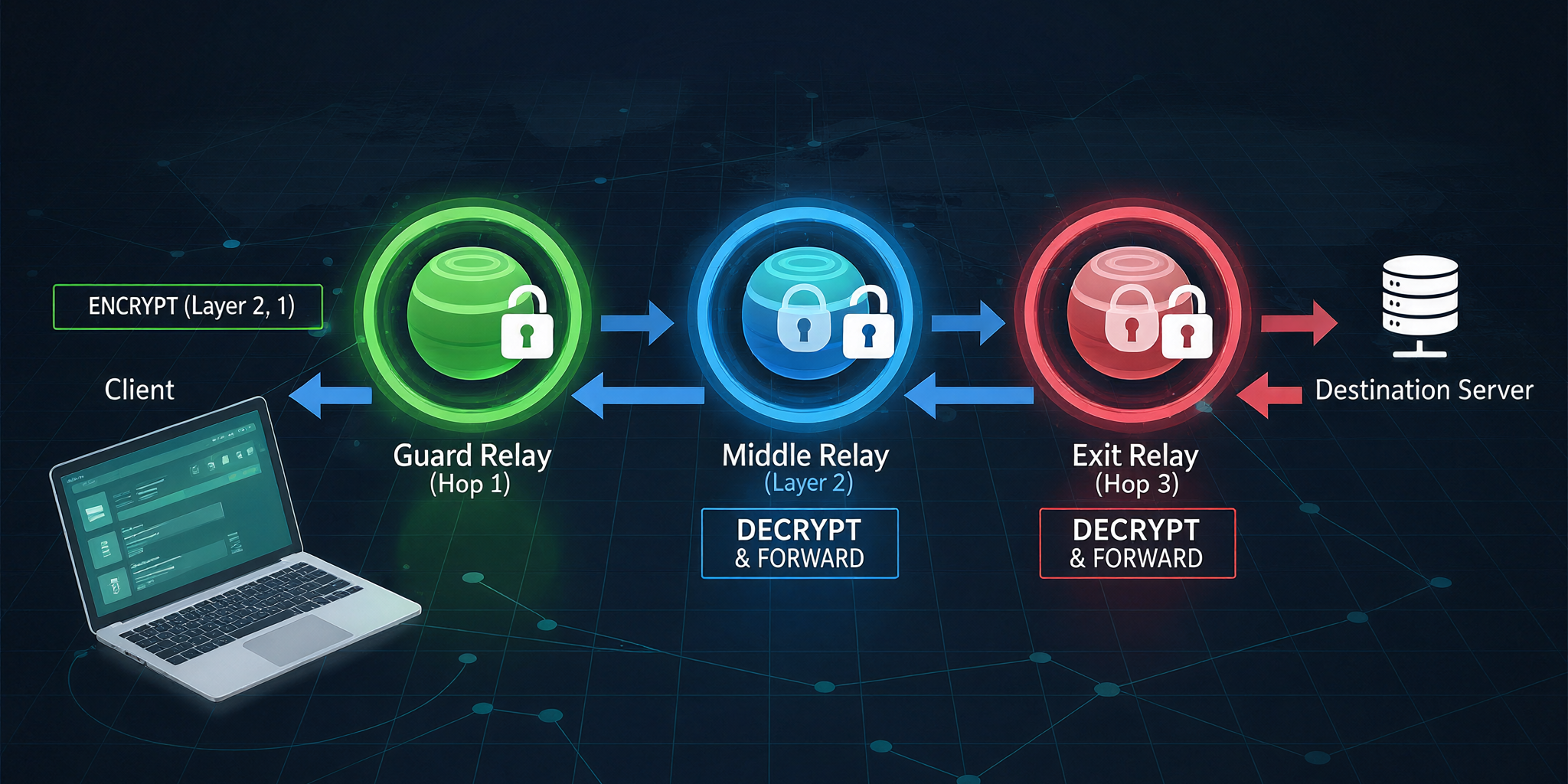
The secret sauce for Tor network is its "onion routing". Users establish a circuit of three machines through which their traffic travels. Three is the magic number that ensures no node in the circuit knows both the source and destination of the traffic. The "guard relay" or entry node, knows only the source, the "exit node" knows only the destination, and the "middle relay" knows only the other nodes.
A Tor circuit is a path through the network consisting of three relays, or nodes. These are not ordinary users, but servers setup for the express purpose of routing traffic.
onion services
Onion services ar typically websites, and can only be accessed by users on Tor network. Users often lament that they are slow. A server offering a onion service constructs its own circuit, so requests and responses essentially travel through two circuits, doubling the latency. There is also a lookup process to locate them via a directory server that is slower than the DNS system used when Tor is used to access clearnet websites.
Tor browser
Tor network periodically releases a browser bundle that has the Tor daemon and a modified Firefox-ESR browser. They're taken steps to ensure it is hardened, and to make it resistant to fingerprinting techniques that would reveal information about the user's system. Modifications to the userlying browser are pushed upstream and typically incorported into future Firefox builds.
posts
In future you can expect to see posts here about Tor that include topics like these:
- using other (non-browser) software with Tor
- sites and services
- TailsOS and Whonix